
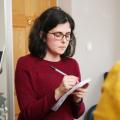


THE University of Essex runs a “lifeline” group for people diagnosed with young-onset dementia.
Based at the university's Health, Wellbeing and Care Hub in Colchester, the group brings together people under 65 who are living with dementia and their carers.
The hub offers a space to share experiences, access practical support and connect with others facing similar challenges.

Former maths teacher Wendy Whittaker, 60, was diagnosed after her right hip collapsed and she developed a stutter.
She now struggles with memory loss, numbers and finding words.
Wendy said: "Sometimes I find myself wandering around Tesco.
"I know exactly what I've got to buy, but as soon as I walk into that store, I haven't got a clue.
"The whole thing is really horrible.
"It's not just the everyday; it's about what lies ahead of you, and it's scary."
Wendy spent three or four months alone at home before finding the group, which she says transformed her outlook.
She said: "I felt like my whole life had imploded.
"I had nothing left.
"Then I saw this group here, and it's made such a big difference.
"I really look forward to coming because we understand each other.
"When I sat at home I was really sad and desolate.
"But here we are, laughing, having fun and taking the mick."

Clive Croucher, 62, from Clacton, also attends the group with his wife Jayne.
He has Lewy body dementia, which forced him to give up his job as a forklift truck operator and has affected the couple’s plans for the future.
Jayne said: "Night times can be hard.
"Clive can be kicking and punching in his sleep, and has even been known to take lightbulbs out.
"We laugh about it, and that's how we deal with it."
Clive said: "The people here are terrific.
"You couldn't ask for anything more from them.
"I like bantering with the students, and it gets me out of the house and talking to people.
"You can really be yourself here and feel comfortable."
Occupational therapist Sarah Watson, who runs the group, said meeting people of a similar age can ease isolation and uncertainty after a diagnosis.
Sarah said: "This is why the group is so important to those who attend.
"It provides a safe, supportive, and understanding environment where people can meet others of a similar age, share experiences, access information, and build meaningful connections.
"For many attendees and their support networks, the group has become a lifeline, helping them come to terms with their diagnosis while focusing on living well and preparing positively for the future."
Read more
Dementia UK calculates there are more than 70,000 people diagnosed with the disease.
The group began as a 12-week programme and now meets monthly at Clingoe House on the University of Essex’s Colchester campus.
To find out more, contact the hub at healthwellbeingcare@essex.ac.uk.


Share